Zero Waste Holiday Travel: Sustainable Ways to Visit Family and Friends
Flexible holiday travel ideas that account for food safety, local waste rules, and transport choices.
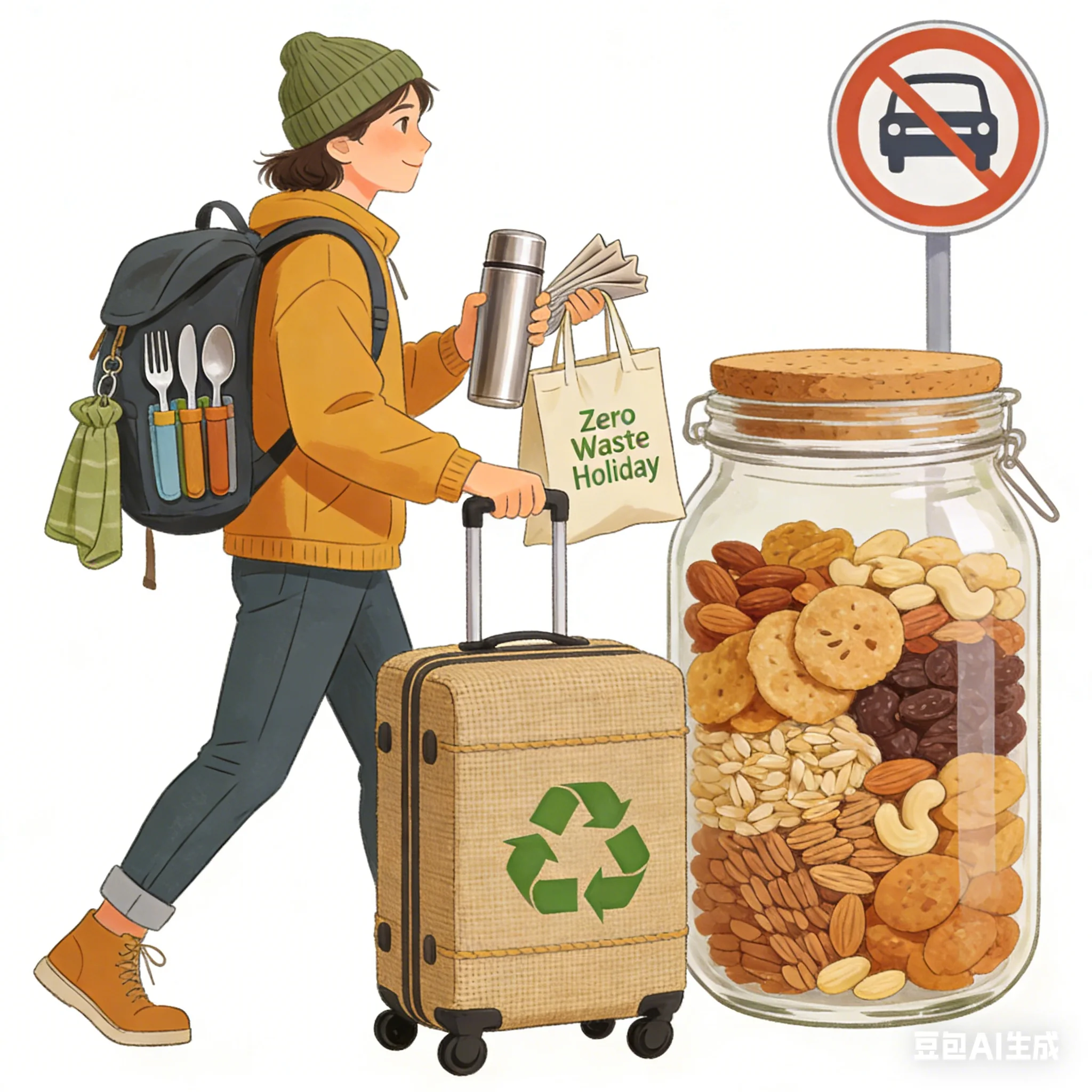
Lower-Waste Holiday Travel
Holiday trips can involve extra packaging and travel emissions, but there is no single route or transport mode that is best for every journey. Distance, vehicle or aircraft, passenger load, connection route, and personal needs all matter. This guide focuses on choices you can check before and during a trip.
Compare the whole journey
When emissions matter to your decision, compare the full route and realistic passenger count with a transparent calculator or source. Do not use a universal mileage cutoff to decide between driving and flying. A peer-reviewed passenger-transport comparison shows why mode and occupancy can change estimates. Rail, coach, carpooling, and flying are not interchangeable on every route, so also consider time, accessibility, cost, and safety.
If you drive, combine errands where practical and make sure the vehicle is maintained as its manufacturer recommends. If you fly, check baggage limits and pack for the trip rather than carrying a large kit you will not use. Avoid claims about offsets as a guaranteed substitute for reducing emissions; if you consider one, review how the project is measured and independently verified.
Pack a few useful reusables
Bring a bag, bottle, cup, or utensil only if it fits your trip and you can clean it. Check current airport, carrier, and destination rules before packing liquids, blades, or food. If local drinking water is not considered safe, follow local public-health advice and use a treatment method suited to the specific risk.
Before departing, review what your lodging actually provides. Refillable dispensers, towel reuse, and reduced housekeeping may be available, but policies differ. Check what a sustainability label covers instead of relying on the word “green.”
Choose food with storage and safety in mind
Carry snacks or leftovers in a container if that is convenient and permitted. Ask a restaurant whether it accepts personal containers before handing one over. If food needs temperature control, use safe refrigeration or an insulated bag with an appropriate cold source; an insulated bag by itself does not guarantee safe temperatures.
For U.S. travel, USDA guidance for takeout and leftovers says perishable food should generally be refrigerated within two hours, or within one hour when the surrounding temperature is above 90°F. Follow the public-health rules where you are traveling.
Respect local disposal rules
Recycling and food-scrap programs vary by destination. Use the accepted-material list for the place you are staying, and do not put compostable packaging in a food-scrap bin unless that service accepts it. If a reusable option creates extra hassle or is not permitted, use the available service and continue with the next practical choice.
Low-waste travel is not a test of perfection. A small set of useful habits, local knowledge, and flexible planning is more practical than carrying equipment for every possible situation.
Continue Your Zero Waste Journey
Ready to learn more? Explore our other guides and tips for sustainable living.