Sustainable Gift Wrapping Ideas: Beautiful Zero Waste Presentation Techniques
Ideas for reusing fabric, boxes, and other gift wrap, with local disposal rules in mind.
Sustainable Gift Wrapping Ideas: Beautiful Zero Waste Presentation Techniques
Gift presentation can be thoughtful without buying a new roll of wrap for every occasion. Reuse gift bags, boxes, fabric, or paper that you already have, and choose a new material only when you need it. Reuse is practical when the recipient can keep or pass the wrapping on.
Understanding the Problem with Conventional Gift Wrap
Wrapping paper is not one uniform material. Plain paper may be accepted by some recycling programs, while foil, glitter, plastic film, laminated finishes, and attached decorations may not be. Scrunch-test rules are only a rough guide; follow the instructions from your local recycling service. The EPA notes that accepted materials vary across municipal recycling programs.
Ribbon, bows, gift tags, tape, and gift bags may use different materials and are often handled separately from paper recycling. Remove decorations where practical and reuse them; check local rules before putting any accessory in a recycling bin. A reusable bag only avoids waste when it is kept and used again.
The effect of a wrapping choice depends on the material, how often it is reused, and local disposal options. Choose a presentation that suits the gift and recipient, and start with materials already available to you.
Fabric Wrapping: The Art of Furoshiki and Beyond
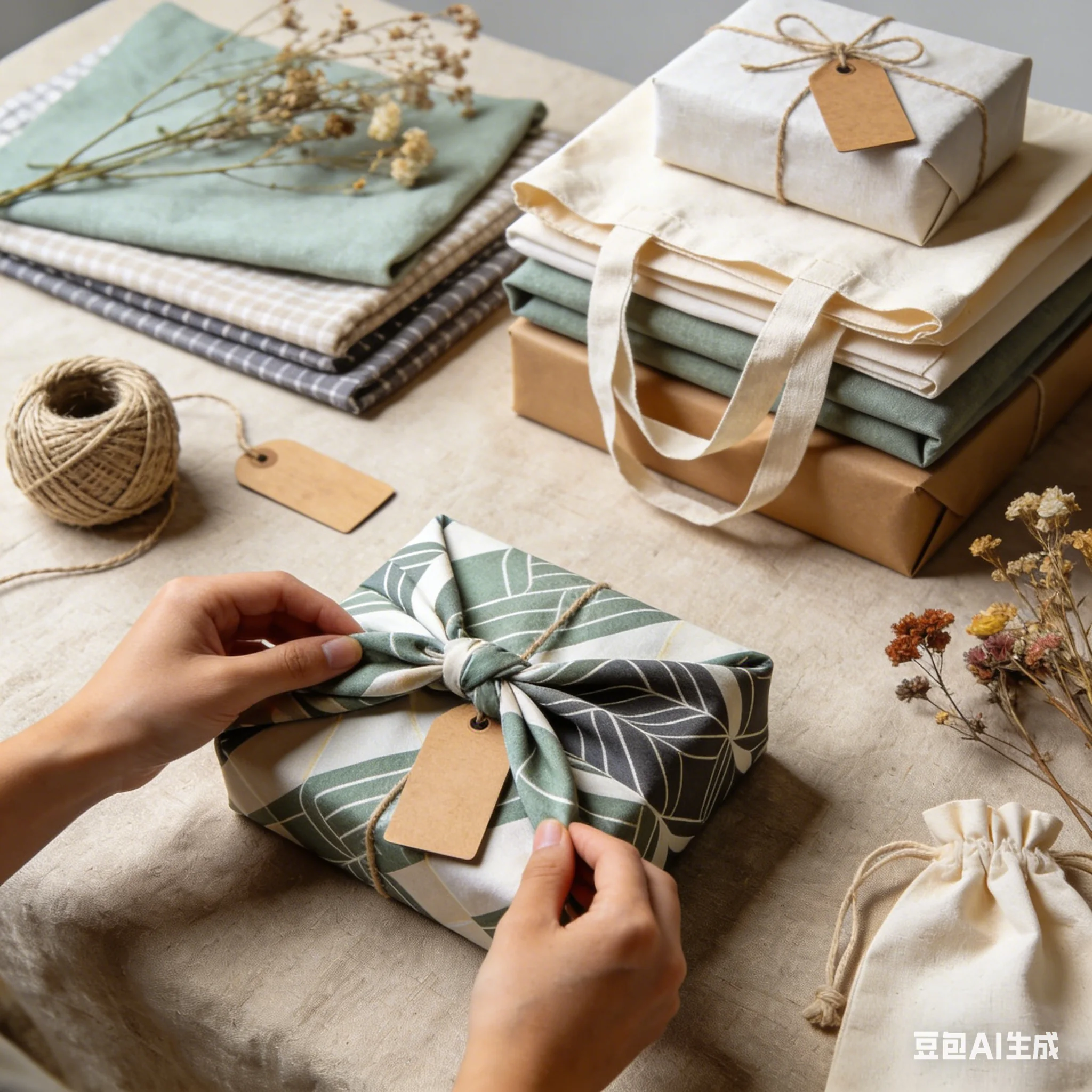
Fabric wrapping, including furoshiki-style folds, can be reused when the cloth is kept in circulation. It is not automatically lower-impact if bought for a single use, so consider a scarf, tea towel, or fabric scrap already at home.
Getting Started with Furoshiki
Furoshiki-style wrapping uses a square of fabric sized to the item being wrapped. The cloth can be new or something you already own, such as a scarf or tea towel; buying fabric for one use may not reduce material use.
The basic technique involves placing the gift in the center of a cloth, bringing opposite corners together, and tying them in various ways depending on the desired look. Simple knots create casual, welcoming presentations, while more elaborate folding techniques can create sophisticated, almost sculptural effects. Online tutorials offer step-by-step instructions for dozens of different furoshiki knots and folds.
The recipient may be able to reuse the cloth for wrapping or another suitable purpose. Ask whether it is useful to them; do not assume a second use will happen.
Modern Fabric Wrap Alternatives
If traditional furoshiki feels too formal or unfamiliar, simpler fabric wraps work beautifully. Small tea towels, handkerchiefs, and cotton napkins can all serve as gift wrap. Simply place the gift in the center, gather the corners, and tie with a ribbon or piece of twine. The recipient receives both the gift and a useful item they can incorporate into their daily life.
For larger gifts, consider using bandanas, scarves, or even lightweight blankets. A beautiful throw wrapped around a large gift creates a stunning presentation that doubles as the gift itself. This approach works particularly well for wedding gifts, housewarming presents, or other significant occasions where the wrapping can be as substantial as the gift inside.
Reusable Containers as Gift Wrap
Reusable containers offer another sustainable approach to gift presentation. Baskets, boxes, bags, and jars can all serve as gift wrap, containing and presenting the gift while becoming useful items in their own right.
Baskets and Boxes
Wicker baskets, wooden boxes, and decorative containers make beautiful gift presentations for nearly any occasion. Fill a basket with food items, bath products, or baby supplies, and the container itself becomes a lasting gift. The recipient can reuse the basket for storage, display, or future gift giving.
Decorative metal tins in various sizes work beautifully for cookies, candles, or small items. These can be found at craft stores, repurposed from gift purchases, or purchased specifically for gift giving. After the recipient enjoys the contents, they have a lovely tin for storing craft supplies, baking ingredients, or miscellaneous items.
Glass containers—jars, vases, and bowls—make sophisticated gift wrap for food items, bath products, or anything that fits. After the gift is enjoyed, the container serves as pantry storage, bathroom organization, or decorative display. For particularly special occasions, consider antique or vintage glassware, adding an element of history to your gift.
Fabric Gift Bags
Drawstring bags made from cotton, linen, or silk are one possible gift presentation. They can be reused if the recipient has a use for them and keeps them in circulation; consider using a bag already available before buying a new one.
Making your own gift bags from fabric scraps or old clothing is a creative way to reduce waste while creating unique gift presentations. Simple drawstring bags can be made with basic sewing skills, and even those who don't sew can create fabric bags by cutting old t-shirts or sheets into squares and gathering them with ribbon or twine.
Reusable and Simple Embellishments
Small decorations can add material and sorting steps. Reuse ribbon and tags you already have, or skip them when they are not needed.
Natural Ribbons and Twine
Jute twine, hemp cord, and cotton ribbon can be reused when kept in good condition. Their disposal depends on coatings, dyes, adhesives, and local compost rules, so do not assume they are accepted in a home pile.
Save usable ribbon for another occasion. Put worn or decorated ribbon in the waste stream specified by local rules unless a composting service explicitly accepts it.
Sisal rope, linen cord, and even yarn scraps can serve as gift tie-ons. Get creative with what you have available—old embroidery floss, leftover knitting yarn, or natural fiber rope from the garden center all work beautifully.
Natural Decorations
Fresh greenery, pine cones, dried flowers, and branches can decorate a gift. Use material you have obtained lawfully, and reuse or dispose of it according to local yard-waste and compost rules.
Dried orange slices, cinnamon sticks, and star anise can be saved for another use where appropriate. Whether food scraps or decorations can be composted depends on the local system and any attached ribbon, wire, glue, or finish.
Paper decorations can be stored and reused or recycled if they are accepted by your local program and free of incompatible coatings or attachments.
Reimagining Gift Tags
Gift tags represent another opportunity for sustainable practices. While conventional gift tags are often printed on glossy paper with plastic reinforcement holes, sustainable alternatives are simple and often more meaningful.
Natural and Repurposed Gift Tags
Brown paper tags can be saved or recycled where accepted. Remove strings, tape, and other attachments, and do not put printed or coated tags in compost unless your local service accepts them.
Repurpose old cards by cutting them into tag shapes. Cut the fronts from holiday cards, birthday cards, or any beautiful card stock you have. Punch a hole and thread with twine. This recycling of old cards extends their life while creating beautiful, unique gift tags.
Natural materials like wooden spoons, slices of wood, or stone tiles can serve as unconventional gift tags. Write directly on the surface or attach a small paper tag with the recipient's name. These become keepsakes that recipients may keep and display.
Digital and Reusable Alternatives
Consider skipping paper gift tags entirely. Write directly on fabric wraps or containers. Attach small reusable tags made from metal, ceramic, or other durable materials that can be used year after year.
For large gatherings, consider a shared station with reusable tags or cards. Guests can add names and return the tags for another use.
Creating a Zero Waste Gift Wrap Kit
You do not need to buy a wrapping kit. Set aside clean, usable bags, boxes, paper, and fabric that you already have, then add a material only if you will reuse it.
Essential Supplies to Collect
Start with fabric squares, scarves, napkins, baskets, boxes, or containers you already have. Save usable twine and ribbon for another occasion; do not assume a natural-fiber tie or ribbon is accepted in home or municipal compost.
Build a collection of embellishments: pine cones, dried flowers, fresh greenery, and decorative elements that can be used year after year. Store everything in a designated container or closet so it's ready when gift-giving occasions arise.
Making It Accessible
Keep your gift wrap kit organized and accessible. A large bin or closet containing all your supplies makes gift wrapping more likely to happen than supplies that are scattered or difficult to access. Consider creating a gift wrap station where you can leave projects partially assembled.
Include gift tags, scissors, and writing implements in your kit. Add decorative paper for occasions when fabric or containers aren't appropriate. Everything should be in one place, clearly organized, so that gift wrapping feels like a pleasure rather than a chore.
The Gift of Sustainability
Sustainable gift wrapping does more than reduce waste—it transforms the act of giving into something more meaningful. The additional thought that goes into choosing fabric, selecting a basket, or creating a handmade tag communicates care for both the recipient and the world we share.
Reusable wrapping only avoids extra waste when it stays in use. Ask the recipient whether they want to keep a bag, box, or cloth, and offer ordinary paper or no wrapping if that is simpler.
Start with materials you already have and check local recycling or compost rules before disposal. The most practical approach is the one that fits the gift and will actually be reused.
Continue Your Zero Waste Journey
Ready to learn more? Explore our other guides and tips for sustainable living.