Zero Waste Workplace Lunch: Sustainable Eating at the Office
Flexible workplace lunch ideas for food safety, reusable containers, meal planning, and varying office facilities.
Zero Waste Workplace Lunch: Sustainable Eating at the Office
Work lunches can involve takeout packaging, disposable utensils, and food that is not eaten. The options available depend on your schedule, budget, workplace facilities, and dietary needs. This guide focuses on practical changes without assuming that bringing lunch is possible or best for everyone.
Understanding Workplace Lunch Waste
To estimate the effect of a workplace change, use your own headcount, attendance, and purchasing data. Avoid comparisons based on containers, cars, or other objects unless the assumptions are stated and sourced.
The goal does not require perfection. It starts with awareness and builds incrementally, replacing disposables with reusables when circumstances allow.
Building Your Office Lunch Kit
The foundation of zero waste workplace eating is a well-equipped lunch kit. Having the right tools makes sustainable choices easier than disposable alternatives, removing barriers that often lead to convenient but wasteful decisions.
Essential Containers
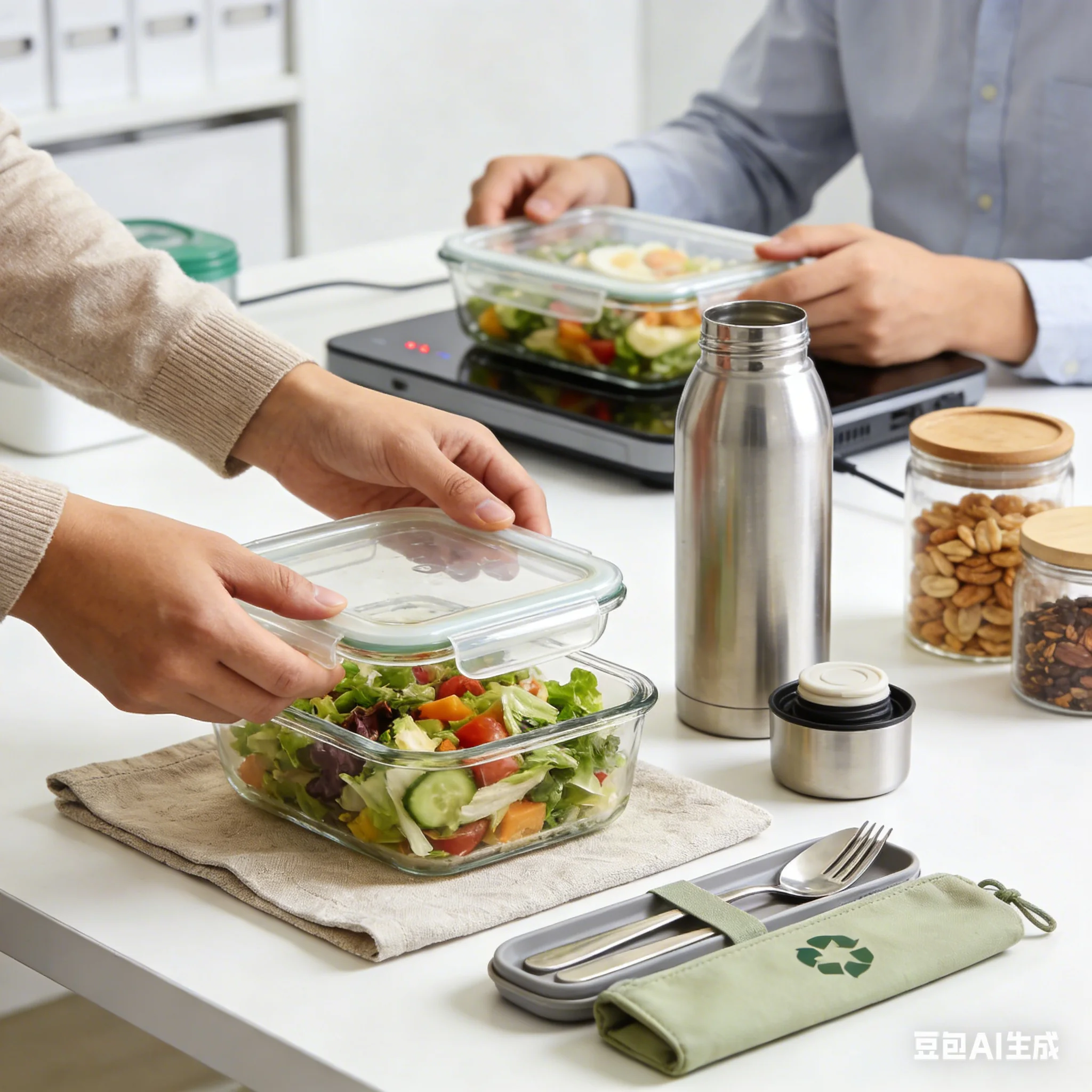
Use a food container that suits the meal, is easy to clean, and is labeled for the storage or heating method you plan to use. Glass can be useful but is heavier and can break; inspect containers and lids regularly.
For soups or other liquids, use a container labeled for the food and intended holding method. An insulated container's performance varies; follow its instructions and do not assume it keeps perishable food at a safe temperature until lunch.
If you pack sauces or condiments, use a clean container labeled for food and check that it seals securely. Some containers nest within others; size and storage space vary.
Utensils and Accessories
If carrying and washing them is practical, keep reusable utensils at your desk or in your lunch bag. Choose materials and designs that suit your food, cleaning access, and workplace rules.
Cloth napkins can replace paper ones when you can store and launder them. Compare the cost and care with the disposables you would otherwise use.
If safe refill water is available, a reusable bottle may replace some single-use bottles. Choose a size and design that suits your routine, and follow its care instructions; insulation performance varies by product and conditions.
Lunch Bag or Container System
An insulated bag alone does not guarantee that perishable food stays at a safe temperature. Follow workplace refrigeration guidance and use an ice source when needed; see the food-safety guidance below.
If you prefer, a clean tote bag can carry lunches that do not need insulation. Keep one where it is convenient if that helps your routine.
If you have access to a refrigerator, store perishable food promptly after arrival and keep it covered and labeled.
Meal Planning and Food Safety for Workplace Lunches
Planning can help you use food already on hand. Keep the plan flexible enough to account for schedule changes and food that needs to be eaten first.
For food safety, follow local public-health guidance. In the United States, USDA advice for takeout and leftovers says to refrigerate perishables within two hours, or within one hour when the surrounding temperature is above 90°F. Use insulated containers only as directed and do not rely on appearance or smell to determine safety.
Weekly Meal Planning
Spend time each week planning your lunches for the coming days. This doesn't need to be elaborate—a simple list of what you'll eat each day is sufficient. Consider what you already have in your refrigerator and pantry, what needs to be used before it spoils, and what you're in the mood for.
Batch cooking on weekends or evenings can prepare multiple meals at once. Cook only an amount you can store and use safely; whether this saves time depends on your schedule and kitchen setup.
Consider themes for different days to add variety without requiring new planning each day. Meatless Mondays, Taco Tuesdays, or Grain Bowl Wednesdays give you a framework while leaving room for flexibility. Themes also make shopping and preparation more efficient.
Utilizing Leftovers
Dinner leftovers can become workplace lunches if they suit your food-safety needs and can be stored and transported safely. Plan extra portions only when you expect to use them; taste and texture can change after storage.
Transform leftovers into entirely new meals to prevent boredom. Roasted vegetables from dinner become a grain bowl topping for lunch. Grilled chicken transforms into a salad topping. Soup that was dinner Monday becomes Tuesday's lunch. This transformation prevents the monotony that often drives people toward takeout.
Freezer-friendly meals provide variety and backup options. When you cook, make extra portions specifically for the freezer. On busy days when meal prep wasn't possible, you have a home-cooked meal ready to grab and go.
Navigating Office Food Culture
Workplace food routines vary, from shared meals to individual lunches. Ask what options are available and make choices that fit the situation and your needs.
Handling Meetings and Events
If a meeting or event includes food, ask about reusable tableware or lower-packaging options when appropriate. For catered events, confirm what the vendor and venue can provide rather than assuming a particular option is available.
For your own meetings and events you organize, model sustainable practices. Use real dishes, provide cloth napkins, and avoid individually wrapped items. Your choices demonstrate that sustainable eating is both possible and preferable.
When attending meetings where unsustainable options are provided, do what you can within the situation. Bring your own reusable container and utensils. Take only what you need to avoid waste. These individual choices, consistently maintained, demonstrate commitment while avoiding the all-or-nothing thinking that often leads to abandoning sustainability entirely.
Social Eating Situations
Coworkers often eat together, whether at the cafeteria, nearby restaurants, or each other's desks. These social situations can support or challenge zero waste eating depending on how they're approached.
Suggest restaurants that offer sustainable options or use less packaging. When eating out, bring your own containers for leftovers rather than accepting disposable ones. These practices normalize sustainable behavior while demonstrating that it's neither difficult nor strange.
Be flexible in social situations. If a coworker brings treats wrapped in plastic, accepting graciously maintains relationships while continuing your zero waste practices in other areas. Perfectionism in sustainability often creates more barriers than it removes.
Dealing with Unsupportive Environments
Workplace rules and facilities vary. If personal containers or reusable dishes are not allowed, choose from the options the workplace permits and meets your needs.
If dishes can't be reused, focus on other aspects of sustainable eating. Bringing food from home in a reusable container can avoid some takeout packaging for that meal. It still uses ingredients and may require other packaging, so the amount avoided depends on what you would otherwise order.
If you propose a workplace change, describe the problem and ask what options are feasible. Track costs, use, and waste before and after only if the workplace wants to evaluate its results; do not promise savings or satisfaction improvements in advance.
Healthy and Delicious Zero Waste Lunch Ideas
Sustainable eating shouldn't mean sacrificing nutrition or flavor. With some creativity, zero waste workplace lunches can be both healthy and delicious.
Grain Bowls and Salads
Grain bowls are one flexible lunch format. Try a base such as rice, quinoa, farro, or barley; add a protein and vegetables that meet your dietary needs, then pack sauces separately if useful. Keep temperature-sensitive ingredients chilled as needed.
Salads transcend the boring lettuce-and-tomato stereotype. Build salads on sturdy bases like kale, cabbage, or mixed greens. Add varied textures and flavors—crunchy nuts, creamy avocados, tangy cheeses, and sweet dried fruits. Include protein to make the salad satisfying for a main meal. Dress separately in small containers to prevent sogginess.
Both grain bowls and salads benefit from batch preparation. Cook grains in large quantities on Sunday. Wash and prep vegetables for the week. Assemble bowls or pack salad components separately each morning for a fresh, varied lunch.
Wraps and Sandwiches
Wraps and sandwiches remain classic lunch options that travel well and satisfy hunger. Elevate these familiar foods with quality ingredients and thoughtful combinations.
Use whole grain breads and tortillas for more nutrition and flavor than refined alternatives. Fill with varied ingredients—different vegetables, proteins, spreads, and cheeses—to prevent boredom. Consider seasonal variations that take advantage of fresh produce at different times of year.
For those who find bread and tortillas become soggy, pack components separately and assemble at lunch. This slight inconvenience prevents the unappetizing texture of soggy sandwiches while maintaining the variety and satisfaction of the meal.
Soups and Stews
Insulated containers make soup a practical workplace lunch option. Hot soups provide comfort and nutrition during cold months, while cold soups like gazpacho work well in summer. Soups and stews are excellent vehicles for using vegetable scraps and leftovers, reducing food waste while creating satisfying meals.
Prepare soups in batches, freezing portions for busy days. A container of homemade soup heated at the office provides nutrition and comfort that takeout can't match. Include crusty bread or a simple salad for a complete meal.
For those without access to microwaves, thermos-style containers keep soups hot for hours. This option opens up soup as a viable lunch option even without workplace heating facilities.
Financial Benefits of Zero Waste Workplace Lunches
Packing a lunch may cost less for some people, but prices, portions, transport, and time vary. Compare your own costs before assuming it will save money.
The True Cost of Purchased Lunches
To compare costs, record what you actually spend on a typical purchased lunch and what the ingredients for a packed lunch cost, including any food that goes unused. Count the value of your time and any equipment only if they matter to your decision. Your result is specific to your routine.
Budget-Friendly Meal Prep
Packing a lower-waste lunch can fit a budget, but bulk goods, seasonal produce, and cooking from scratch are not always cheaper. Compare local prices and buy quantities you can use.
Beans, lentils, tofu, grains, and vegetables can be flexible lunch ingredients. Prices, nutrition needs, and dietary preferences vary; choose foods that suit your household and budget.
Planning meals around food you already have and using leftovers may help reduce avoidable food waste. The effect on grocery spending depends on what you buy and discard.
Building Sustainable Workplace Lunch Habits
Creating lasting habits requires more than initial enthusiasm. By understanding how habits form and persist, you can build zero waste eating practices that become second nature.
Habit Formation Strategies
If packing lunch is useful for you, try placing the clean kit somewhere visible or pairing it with an existing routine. Adjust the reminder if it does not fit your mornings.
Stack new habits onto existing ones. If you already make coffee each morning, add lunch packing to that routine. If you check your bag before leaving for work, add lunch kit inspection to that check. Existing routines provide scaffolding for new behaviors.
Use environmental cues to prompt desired behaviors. Keep your lunch containers visible and accessible rather than hidden away. Place a note on your refrigerator as a reminder. Create whatever visual or physical cues help the behavior come to mind.
Dealing with Setbacks
Plans can be disrupted by illness, travel, schedule changes, or limited energy. If a routine stops working, adjust it or return to it when practical.
If you forget a lunch item or buy takeout, that one meal does not determine what you choose next time. Make another choice when it fits your needs and circumstances.
If you often forget your lunch kit, try placing it near something you take to work or keeping a spare utensil set at your desk. If packed meals go uneaten, adjust the plan to match your schedule and preferences.
Inspiring Others at Work
Individual changes can be shared with colleagues who are interested. Any broader effect depends on workplace participation, available options, and how changes are measured.
Leading by Example
Sharing a practical change may prompt conversation, but colleagues will make their own choices. If someone asks, explain what works for you, including the costs or inconveniences, without assuming the same option fits everyone.
Offer information and resources when asked, but avoid lecturing or making others feel guilty. Sustainability should feel aspirational and empowering, not punishing or judgmental. Share what works for you without implying that others who make different choices are doing something wrong.
Creating Community
If colleagues are interested, consider a cooking club, shared meal, or garden where workplace rules and facilities allow it. Agree on costs and responsibilities before organizing an activity.
Share resources with coworkers—recipes, store locations, product recommendations. Make your knowledge accessible to those interested in making changes. Being a resource rather than a critic makes others more receptive to sustainable practices.
The Bigger Picture
Workplace lunch choices can affect what an individual buys and the packaging used for that meal. They do not by themselves establish effects on health, local food systems, or an organization's total waste.
If you want to evaluate a change, record the specific packaging or purchases it replaced and the period measured. Avoid converting a personal routine into a broad environmental impact claim without a clear method and comparison.
Start with an option that fits your schedule, budget, food-safety needs, and workplace facilities. Review it after a few weeks and keep, change, or stop it based on what works.
Continue Your Zero Waste Journey
Ready to learn more? Explore our other guides and tips for sustainable living.