Zero Waste Living Challenge: 30 Days
A flexible 30-day calendar of low-waste habits to try at your own pace and adapt to local services.
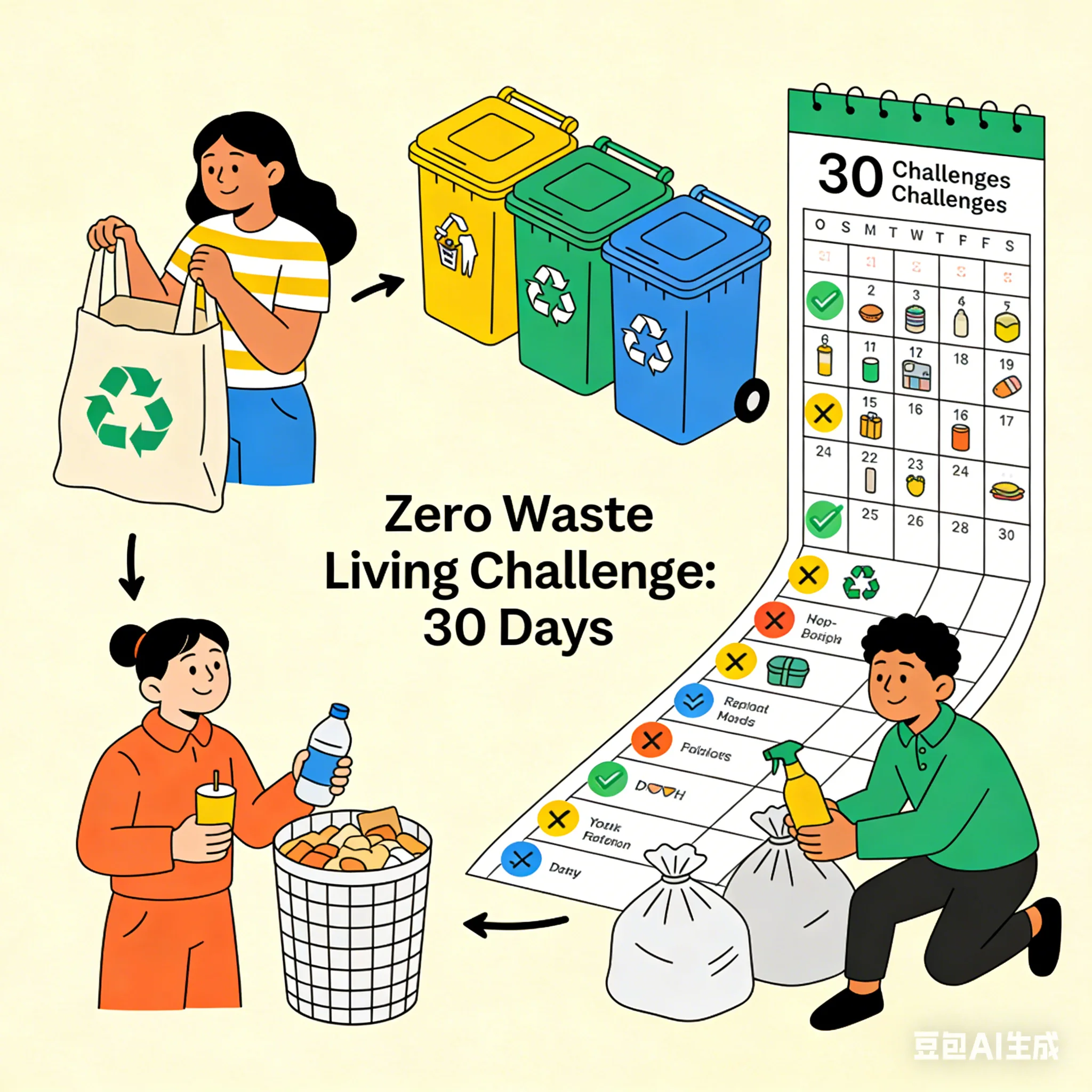
The Zero Waste 30-Day Challenge: Transform Your Habits One Day at a Time
Embarking on a low-waste journey can feel overwhelming. This optional 30-day calendar offers small actions to try at your own pace. It cannot promise a particular reduction in waste: results depend on what you buy, local services, and household needs. Treat each prompt as an experiment, not a rule.
Before You Begin: Setting Up for Success
1. Adopt the Right Mindset: Perfection is the enemy of progress. You will likely make "mistakes" or encounter challenges. That's part of the process. The goal is increased awareness and consistent effort, not a pristine, Instagram-ready jar of annual trash.
2. Conduct a Baseline Trash Audit: For one week, observe your trash and recycling without judgment. What are the main items? Food packaging? Coffee cups? Junk mail? This awareness will make the daily challenges more meaningful.
3. Gather Your Core Toolkit: You don't need to buy anything new! Look around for what you already have: a reusable water bottle, coffee mug, shopping bags, containers, and cloth napkins. The best zero-waste tool is the one you already own.
The 30-Day Zero Waste Challenge Calendar
Week 1: Foundation & Awareness
This week focuses on noticing which single-use items appear in your own routine.
- Day 1: Carry a Reusable Water Bottle. Commit to refusing disposable plastic bottles. Fill up at home, work, or public fountains.
- Day 2: Try a Bag You Already Own. Keep a clean reusable bag where you can find it, if carrying one fits your routine. This will not remove every use of a disposable bag.
- Day 3: Refuse a Single-Use Straw. When ordering a drink, say "No straw, please." Consider carrying a reusable straw if you use them frequently.
- Day 4: Pack a Waste-Free Lunch. Use a container, reusable utensils, and a cloth napkin. Avoid individually wrapped snacks.
- Day 5: Decline Unnecessary Freebies. Say no to promotional pens, flyers, samples, or business cards you don't truly need.
- Day 6: Use Food You Already Have. Make a meal from ingredients you have on hand if that suits your time, budget, and dietary needs.
- Day 7: Weekly Reflection. Look at your trash. What improved? What's still there? Acknowledge your progress without criticism.
Week 2: Kitchen & Food Focus
This week focuses on food, shopping, and kitchen routines that you identified in your own waste check.
- Day 8: Use a Reusable Coffee Cup. Bring your own mug to the coffee shop or make coffee at home.
- Day 9: Shop the Bulk Section. Bring your own jars or bags to buy dry goods like rice, pasta, nuts, or spices.
- Day 10: Compare Produce Options. If loose produce is available and suits your needs, try it. Follow food-safety guidance and choose packaging that works for the food and your household.
- Day 11: Check Local Compost Options. Find out whether your building, city, or community accepts food scraps and which materials are allowed before collecting them. The EPA's home-composting guide explains common system limits.
- Day 12: Reduce Cleaning Packaging. Use a washable cloth for a suitable task or look for a refill option. Use cleaners as labeled; homemade mixtures are not necessarily disinfectants.
- Day 13: Try a Flexible Meal Plan. List a few meals that fit your schedule, check what you already have, and shop for the ingredients you expect to use. Adjust the plan when circumstances change.
- Day 14: Store Something for Later. Use suitable leftovers in another meal or freeze extra portions and herbs in a labeled container. Follow USDA guidance for handling takeout and leftovers.
Week 3: Bathroom & Personal Care
We tackle the plastic-heavy realm of personal hygiene.
- Day 15: Compare Soap Packaging. If you need soap, compare a bar, refill, and packaged option available to you; packaging varies.
- Day 16: Review Hair-Care Packaging. If a shampoo bar suits your hair, try one when you need a replacement. Use a product that works for you and follow its instructions.
- Day 17: Review Your Shaving Routine. If a reusable razor suits you, learn how to use and safely dispose of its blades before switching.
- Day 18: Review Oral-Care Packaging. Keep using toothpaste with fluoride unless your dental professional advises otherwise; compare packaging only among products that meet your oral-care needs.
- Day 19: Opt for Recycled Toilet Paper or a Bidet. Choose TP wrapped in paper, not plastic, or install a bidet attachment.
- Day 20: Ditch Disposable Makeup Wipes. Use reusable cotton rounds or a soft washcloth.
- Day 21: Review Your Cosmetics. Check ingredient and packaging information when choosing a product, and use it according to its label. Environmental terms and local rules vary; do not infer that an item is safe or recyclable from a single ingredient alone.
Week 4: Beyond the Basics & Mindful Consumption
We expand the zero-waste mindset to all areas of life.
- Day 22: Repair Something. Mend a piece of clothing, fix a broken appliance, or glue a cherished item back together.
- Day 23: Visit a Thrift Store. Before buying something new, see if you can find it second-hand. Donate items you no longer need.
- Day 24: Go Paperless. Unsubscribe from junk mail catalogs, switch to digital bills and statements, and use a digital notepad.
- Day 25: Have a "No-Spend" Day. Challenge yourself to buy absolutely nothing for 24 hours.
- Day 26: Review a Drawer or Shelf. Keep what you use, and check whether a local organization accepts items you no longer need. Follow local rules for items that cannot be reused.
- Day 27: Research Local Recycling Rules. Follow your local accepted-material list and preparation instructions. The EPA explains why accepted materials differ among municipal programs.
- Day 28: Communicate Your Values. Politely explain your zero-waste choices to a friend, family member, or local business.
- Day 29: Find Your Community. Join a local zero-waste group, follow inspiring activists online, or start a conversation with a like-minded neighbor.
- Day 30: Celebrate & Look Forward. Conduct a final trash audit. Compare it to your baseline. Celebrate how far you've come and set one intention for the next month.
Sustaining Your Zero Waste Lifestyle Beyond 30 Days
Completing the calendar is optional. Here are ways to keep only the habits that fit:
- Identify Your "Why": Reconnect with your core motivation—whether it's protecting oceans, saving money, or improving your health. This will fuel you during moments of temptation.
- Create Systems: Make your new habits effortless. Keep your reusable kit clean and by the door. Set up a dedicated composting station. Make bulk shopping a regular part of your routine.
- Focus on Your Own Priorities: Concentrate on the recurring waste you observed rather than following a universal ranking. Food, packaging, access, and household routines vary.
- Practice Self-Compassion: If you have to use a plastic straw at a hospital or accept disposable packaging while traveling, don't see it as a failure. The system isn't designed for zero waste, and your consistent effort is what matters.
The Ripple Effect
This optional calendar is a way to try habits and review what fits your life. It cannot guarantee less waste or lower costs; compare your own purchases and discarded items before and after, and keep only changes that are manageable for your household.
To try the calendar, choose a start date and pick actions that fit your circumstances. At the end, review which habits were useful and which you want to change.
Continue Your Zero Waste Journey
Ready to learn more? Explore our other guides and tips for sustainable living.